Table of Contents
Most businesses assume they’re meeting ADA compliance guidelines as long as they have ramps, parking access, and acceptable door widths. However, meeting ADA compliance guidelines goes beyond just meeting the bare minimum. This blog breaks down the five commonly overlooked ADA compliance guidelines that can make a big difference in accessibility, comfort, and usability for wheelchair users.
Proper Knee and Toe Clearance
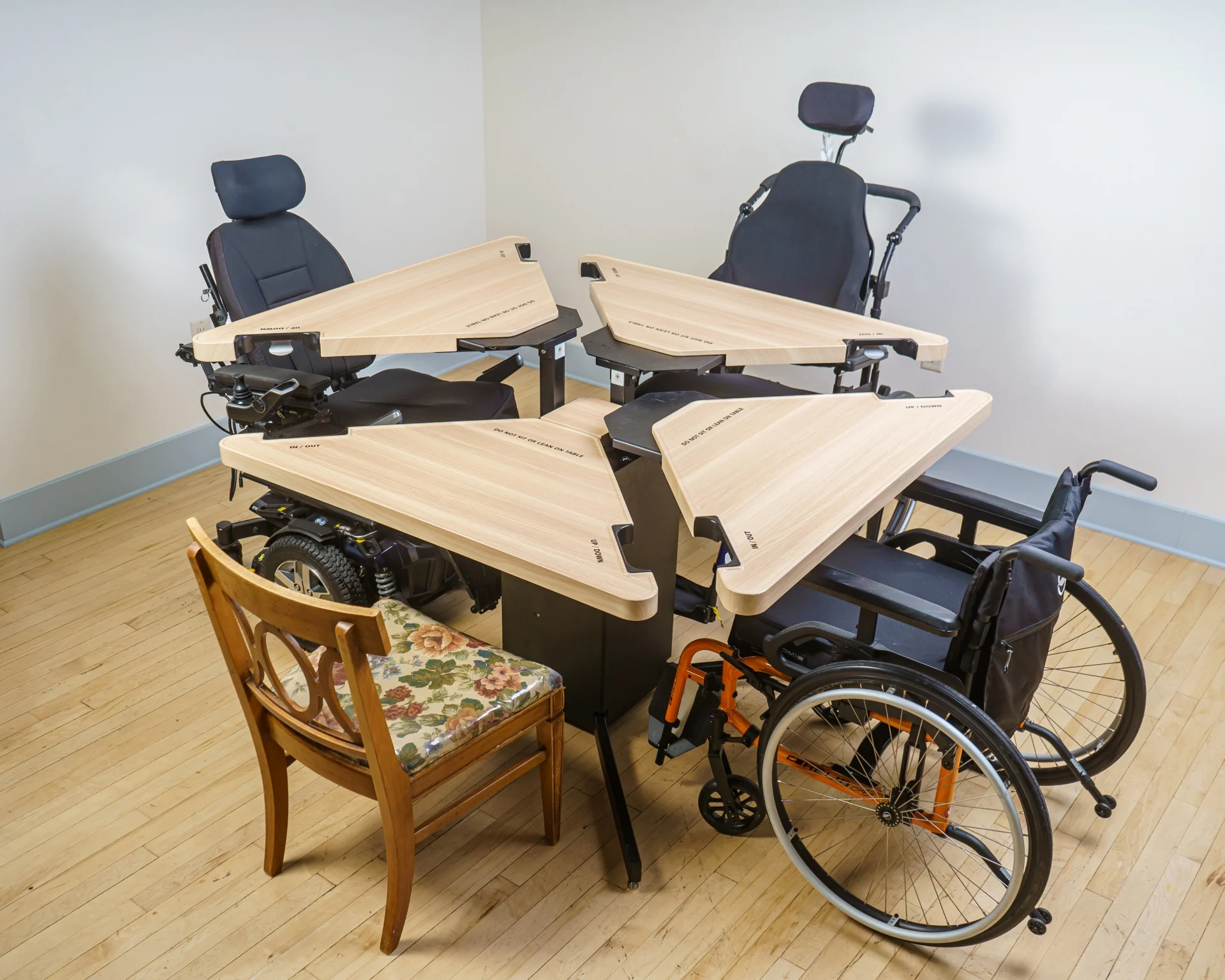
Knee and toe clearance is the open space beneath a table or counter that allows a person using a wheelchair to safely pull in and sit comfortably. ADA compliance guidelines specify that this space must allow for at least 27 inches of height for knee clearance, 30 inches of width, and around 19 inches of depth so a wheelchair can fit fully underneath the table.
Additionally, toe clearance, typically at least 9 inches in height at the lower front edge, ensures that footrests and forward positioning don’t hit barriers when someone moves closer to the table. This ADA compliance guideline is often overlooked because a table can seem compliant based on height alone. However, it could still fail in practice if support beams, pedestal bases, or decorative panels block the usable space underneath.
When knee and toe clearance are considered and done correctly, wheelchair users can sit comfortably and participate socially.
Accessible Route Continuity
Accessible route continuity is the ADA compliance guideline that requires that a person using a wheelchair or other mobility aid be able to travel from one accessible point to another without encountering barriers. It’s not enough for a business to just have an accessible entrance. There have to be continuous, unobstructed paths that connect key areas like entrances, seating, restrooms, service counters, and exits.
This route should be stable, firm, and slip-resistant, with enough width for comfortable passage and no sudden level changes or obstacles that would force someone to stop or seek assistance. Unfortunately, these are all factors that are regularly overlooked. Routes are often blocked by poorly placed furniture, temporary displays, uneven flooring transitions, and narrow aisles. When a business prioritizes route continuity, it ensures that those who use mobility devices can move safely and independently.
Table Distribution in Dining Areas
In restaurants, cafes, or other shared dining spaces, how tables are spaced and placed should allow wheelchair users to move around and not be limited to a single isolated section. ADA compliance guidelines not only require that accessible tables exist. They require that tables be meaningfully integrated into the layout. Meaning they should be distributed in different areas and seating environments, like near windows, in quieter sections, rather than having all the accessible seating grouped together in a corner. Proper table distribution helps improve accessibility and customer satisfaction by allowing equal participation in a restaurant environment.
Reach Ranges
Reach ranges are the distances at which a person using a wheelchair must be able to comfortably access and operate items without needing to stretch excessively or strain themselves. Under ADA compliance guidelines, this applies to anything a customer or guest will need to use in a space, such as payment terminals, service counters, light switches, menus, and many other controls or amenities.
Items should be positioned within a forward or side reach range, low and close enough, to be accessible from a seated position. ADA standards say that key operable parts should be between 15 and 48 inches from the floor, depending on the approach. When reach ranges are overlooked, this creates barriers for wheelchair users. Proper reach range ensures that wheelchair users can independently interact with their environment in the same way that other users do.
Surface Stability and Maneuverability
Under ADA compliance guidelines, accessible surfaces have to be stable, firm, and slip-resistant. These surfaces shouldn’t shift under pressure, create excessive resistance, or become hazardous when wet or worn. These surfaces include flooring materials in hallways, dining areas, ramps, and other entryways, where uneven textures, loose materials, or soft surfaces can make movement difficult and unsafe.
Surface stability also applies to transitions between different floor types, since even small height changes, cracks, or abrupt changes in flooring can interrupt movement and create barriers for wheelchair users. When surface stability isn’t an aspect that’s overlooked, wheelchair users are able to move around properly and create an all-around inclusive environment.
Why Choose Us?
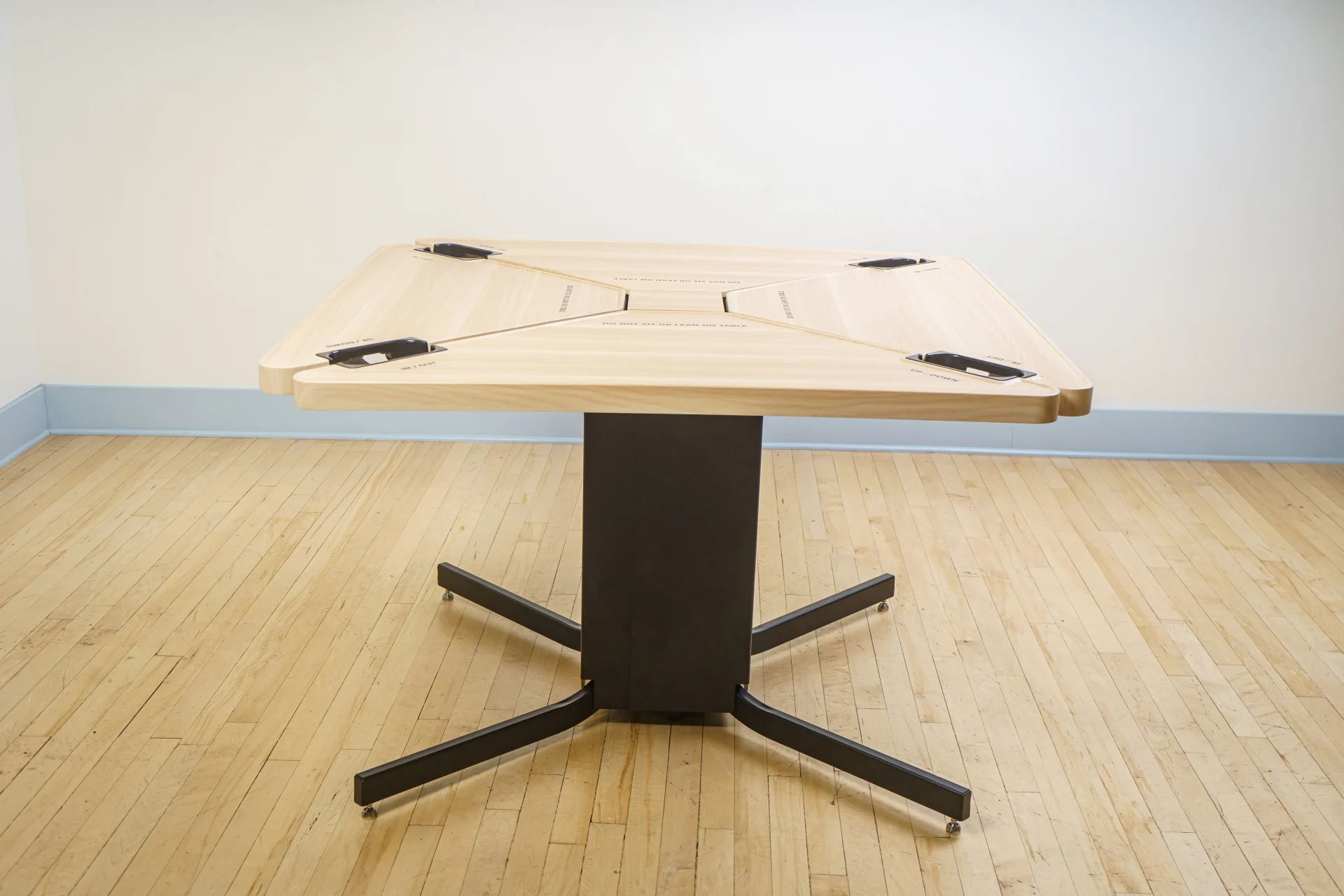
Creating an inclusive environment for all by going above and beyond basic ADA compliance guidelines is vital for businesses. With the Inclusion Table, businesses can make complying with ADA standards that much easier. With sections that move up and down, in and out, the table can easily accommodate those in all types of wheelchairs. Contact us today for more information or to submit your order.