Table of Contents

Creating an inclusive, accessible environment, whether at home, in a classroom, or in a public space, often starts with furniture choices. Tables may seem simple, but the right design can make a significant difference in comfort, usability, and independence for everyone — not just those with disabilities.
In this guide, we’ll compare Inclusion Tables and traditional tables, highlighting the key differences, so you can determine the best option for your needs.
What Is the Inclusion Table?
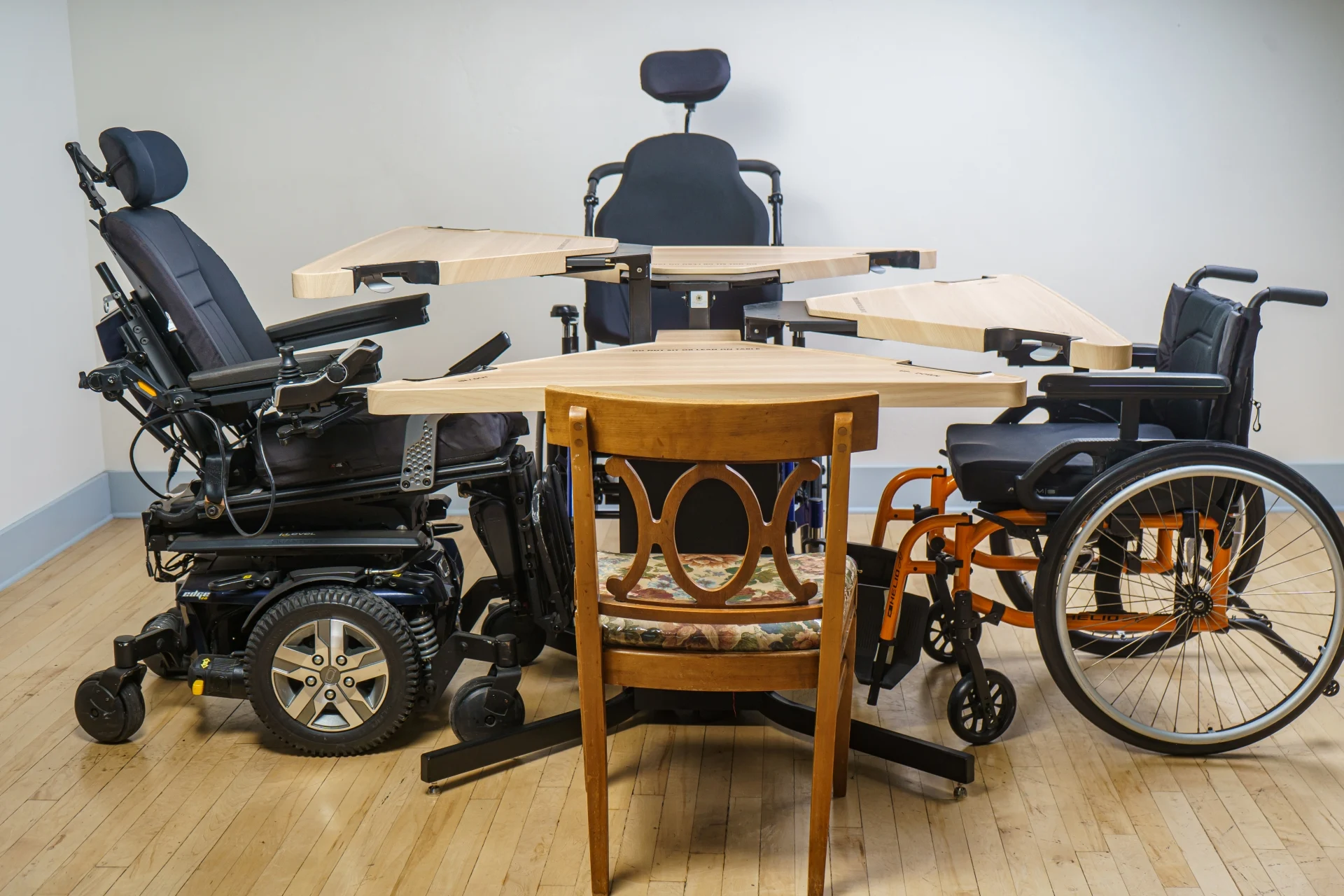
The Inclusion Table is specifically designed to accommodate individuals with varying physical mobility disabilities, including wheelchair users. These tables prioritize accessibility, adjustability, and ease of use so that everyone can participate comfortably in shared activities.
The Inclusion Table features:
- Rounded, spill-proof edging for safety
- Open, unobstructed space underneath
- Easy to clean, durable surfaces
- Leveling legs to increase stability during everyday use
- Up and down adjustments to reduce wheelchair struggles
- In and out adjustments to help users reach without straining
- Seamless access from any side
What Is a Traditional Table?
Traditional tables are designed primarily for general use and typically don’t have accessible features. While they may work well in many settings, they often lack the flexibility needed to accommodate individuals with mobility challenges.
Traditional tables commonly have a fixed height, standard leg placement (which could block wheelchair access), and limited adjustability. Tables can also come in a wide variety of styles and materials, which can pose different challenges for those with disabilities.
Side-by-Side Comparison
Accessibility
The Inclusion Table — The Inclusion Table is designed to meet, and even exceed, ADA-compliance standards. Wheelchair users can roll up comfortably without obstruction, as height adjustments ensure proper posture and usability.
Traditional Table — A standard table often poses a challenge to wheelchair users due to fixed heights and obstructive leg designs.
Adjustability
The Inclusion Table — The Inclusion Table can be adjusted up and down and in and out, making it versatile for children, adults, and individuals with different needs.
Traditional Table — Most tables have a fixed height, limiting adaptability for most users.
Comfort & Ergonomics
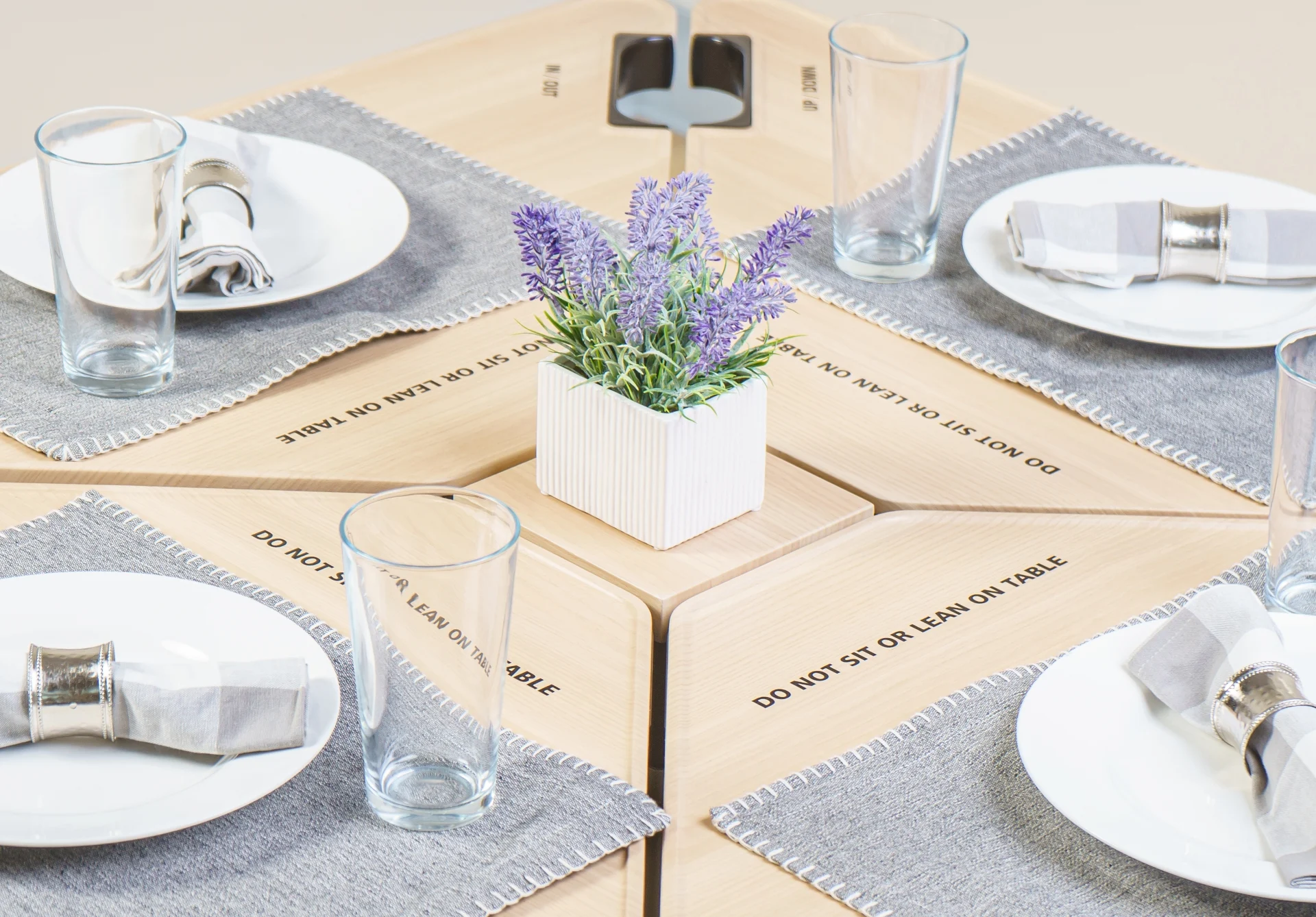
The Inclusion Table — This table promotes better posture and reduces strain, as users can easily reach items from any angle and sit comfortably, no matter the wheelchair.
Traditional Table — Traditional options may cause discomfort over time, especially for individuals who require specific positioning.
Versatility
The Inclusion Table — This table works well in multi-use environments, such as schools and classrooms, therapy centers, healthcare facilities, and homes with multi-generalational or accessibility needs. They may also work well in assisted living facilities and rehabilitation centers.
Traditional Table — Traditional tables are best suited for standard dining spaces, offices, or decorative purposes where accessibility is not a primary concern.
Aesthetics
The Inclusion Table — This table has a modern design that blends functionality with style, offering sleek and minimal looks that fit into many environments.
Traditional Table — Traditional tables come in a broad range of styles, finishes, and decorative options.
Cost
The Inclusion Table — The Inclusion Table has a specialized design and adjustable features, making it a higher investment than a standard table.
Traditional Table — Traditional tables are generally more affordable and widely available.
Which One Should You Choose?
The right choice depends on your space, users, and priorities.
Choose the Inclusion Table if you need to accommodate wheelchair users or individuals with mobility challenges, you want to create an inclusive, accessible environment, or you care deeply about flexibility and adjustability.
Choose a traditional table if accessibility is not a concern, the table will be used in a standard setting, or if you have a small budget.
Additional Accessibility Standards
Creating a truly inclusive and accessible space goes beyond tables. From the moment an individual pulls up to a business or public area, they should feel safe and comfortable.
Property owners should ensure they have proper ramps, automatic doors, and clear pathways for those with mobility issues, as well as signage, alarms, and communication systems that can also alert those with visual or auditory struggles. Service areas, sinks, toilets, and workspaces should also accommodate those in wheelchairs or with mobility issues.
An ADA-compliant space not only fulfills legal requirements but also fosters inclusion, independence, and dignity for everyone.
The Inclusion Table: A Win for Accessibility
The Inclusion Table goes beyond basic functionality, supporting independence, dignity, and equal participation. While traditional tables still serve many purposes, they may fall short in environments where accessibility matters.
As more homes, schools, and businesses prioritize inclusivity, investing in the Inclusion Table can help create a space where everyone feels welcome at the table.